

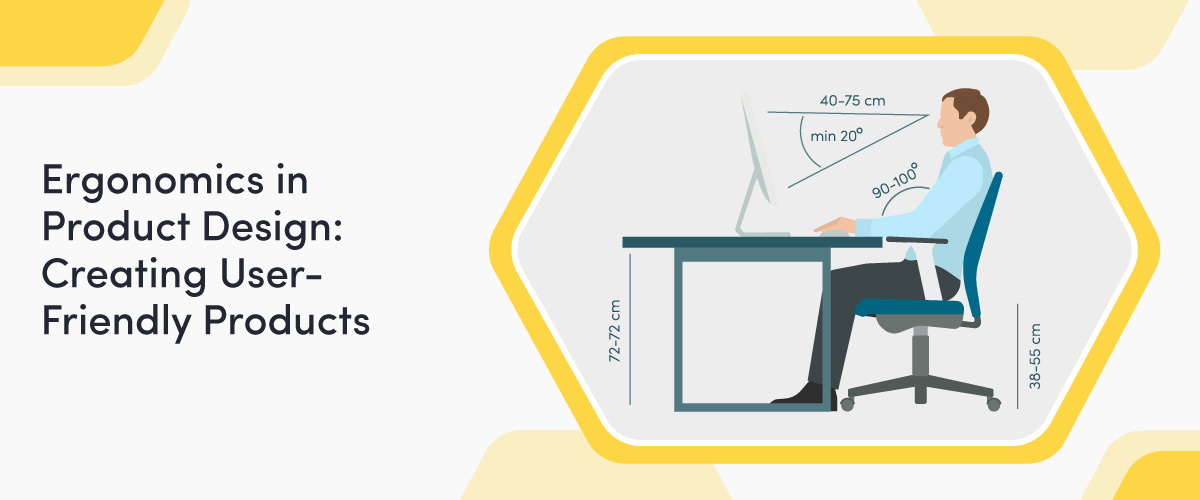
Ergonomics is what makes the products intuitive, natural, and comfortable to use. With so many options out there, people are not going after just good-looking devices but also stuff that fits and works with their limitations. That is why bringing an ergonomic thinking mindset into product design matters.
Understanding how real people actually interact with things enables a designer to reduce strain, enhance comfort, and facilitate ease of use. If a brand cooperates with a professional product design agency, ergonomics becomes the crucial point that differentiates it and creates real, meaningful user experiences. Let’s study its ABC from the start…
What Is Ergonomics in Product Design?
Ergonomics is all about designing a product that is tailor-made for users. It involves tailoring the size, shape, and features that specifically align with users’ physical and cognitive behaviours. Through tailored ergonomic design, the goal is to minimise strain, fatigue, and discomfort, ensuring seamless usability. The discipline adopted while surfacing the physical form of the product is only for ensuring the product fits human needs and even limitations.
The Importance of Ergonomics in Product Design
1. Enhancing Comfort and Usability
One of the important design elements related to the product concerns comfort. When something is shaped to follow the natural position of the body, it just feels easier and more enjoyable to use. If something “fits right”, the difference is essentially immediate.
2. Improves User Efficiency and Productivity
An ergonomic design removes unnecessary strain, letting users accomplish more in less time and with less effort, whether they’re typing, cooking, or assembling.
3. Preventing Injury and Strain
Poor design can lead to long-term physical problems, ranging from wrist strain and back pain to repetitive-stress injuries. Because ergonomic principles create products that align with natural movement, problems like the ones just listed are avoided before they can start, making ergonomics very important in both workplace and consumer settings.
4. Boosts Customer Satisfaction and Loyalty
Ergonomically comfortable products create close emotional relationships. Consumers love companies whose services are easy and pleasurable to use. Firms like Apple and Dyson epitomise how great ergonomics can engender loyalty over a lifetime, and that’s why so many businesses work with product design agency to ensure accurate ergonomics at every stage of the design process, such as Criador Labs.
The Role of Ergonomics in the Product Design Process
1. Human-Centred Research and Testing
The journey of ergonomics in product design begins with an understanding of how real users interact with a product. Such a study of posture, hand movement, grip, force, and usage patterns depends upon anthropometric data, user testing, and observational research to show the real-world behaviour and points of discomfort.
2. Design Iteration and Prototyping
Ergonomic insights feed directly into prototypes. Shapes, curves, material choices, and control placements are refined through repeated testing to achieve optimal comfort. Iterative evaluation ensures the product aligns with human behaviour rather than vice versa.
3. Balancing Functionality and Aesthetics
The strongest aspect of ergonomics is not how it challenges visual design but rather how it complements it. An aesthetically pleasing product that is uncomfortable to hold falls short. Real design value comes at the point where aesthetics meet comfort for humans.
4. Inclusivity and Accessibility
Accessibility and Inclusion Ergonomics also supports inclusive design. Products take into consideration users of varying ages, physical abilities, and grip strengths. For example, a big soft-grip handle in a kitchen tool can make operation easier for older users. For more information on that, read Essentials of Good Product Design.
Examples of Ergonomics in Product Design
1. Consumer Electronics
Examples of ergonomics in this area include smartphones designed for one-hand use, with curved edges for a better grip, and headphones that can remain comfortable even after long wear.
2. Furniture and Workspace Products
Office chairs with lumbar support, adjustable standing desks, and monitor arms help you keep a natural posture and reduce strain at work.
3. Common Household Products
Many everyday items employ ergonomic concepts, like angled kitchen knives and rubber-coated utensil handles, that match the natural motions of your hand and require less force.
4. Transport and Automotive Design
Car manufacturers utilise the benefits of ergonomics through supportive seats, easily reachable dashboards, headrests, steering wheels, and driver controls that help keep you comfortable during those long drives.
If your company is wondering whether investing in ergonomics pays off, check out Why Invest in Good Product Design? for how usability, branding, and market success can be impacted through ergonomic design.
Conclusion
Product design is not just a cosmetic afterthought, but at the very heart of making functional, meaningful, easy-to-use products lies ergonomics. When designers apply ergonomic principles to product designs, comfort, safety, efficiency, and user satisfaction all rise. Understanding how people move and shaping products to fit that movement makes them intuitive and effective. Our goal, as product designers, is not just to look good but to feel right for every user, turning good products into truly outstanding ones.
So, don’t wait and contact Criador Labs to design a product that ergonomically stands out. We are just a call away. Contact us now!

Abhishek Reddy Gujjala
Criador Labs is an innovative product design studio that is future-focused and renowned for turning bold ideas into exquisitely engineered products. With expertise in Medical Devices, Consumer Technology, and Industrial IoT (Internet of Things), we combine strategy, design, and usability to deliver tangible creative solutions. Founded by Abhishek Reddy Gujjala, an entrepreneur passionate about purposeful innovation, Criador Labs reflects his vision of creating meaningful products that solve real-world problems through thoughtful design.
