

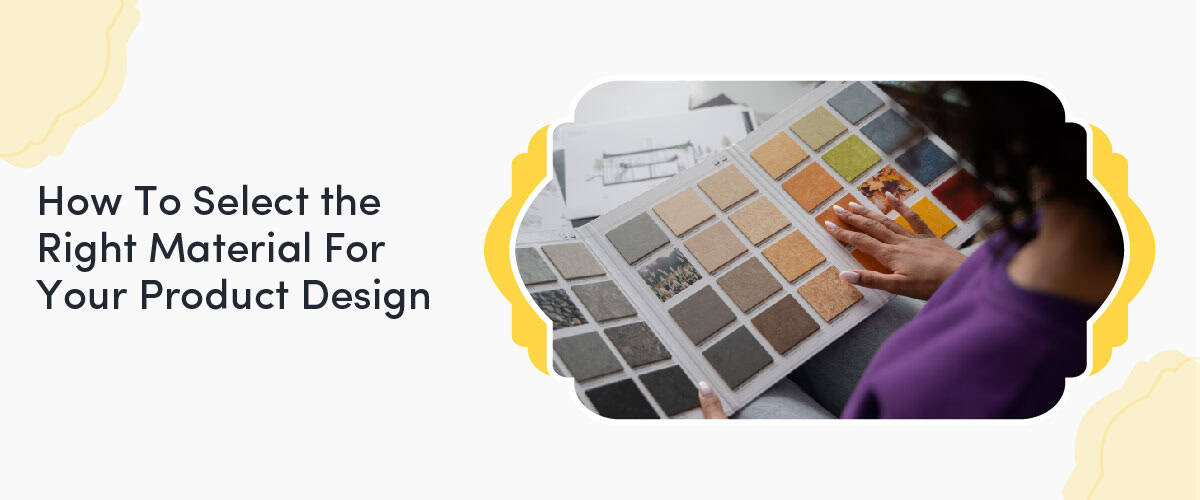
One of the standout things that we notice in any product is the material. But have you ever wondered why a specific product is made from only a certain material? This is because the material has undergone a rigorous selection process and has been found to be best suited for the product. So, given the cruciality of the material selection process, we have crafted this detailed blog post. In which we will explore everything about the material selection in product design. Keep reading!
The Importance of Material Selection in Product Design
Material selection is a crucial phase of product design, which sets the base for a product’s functionality, aesthetics, and sustainability. Materials are the one that ensure the product meets the requirements, like strength, durability, and safety standards. And how can we forget that material selection also plays a major role in determining costs. Since material significantly influences design, production, maintenance, and recycling, the material selection process requires the utmost attention of production engineers and designers.
Types of Material Used in Product Design
Let’s look at the types of material significantly used to meet the requirements of different product design needs:
1. Metals
Metals, like aluminium, copper, titanium, steel, and brass, are heavily used in product design and development to make them strong, durable, and offer a premium look. These metals seamlessly allow engineers to shape the product following the design without malleability issues.
2. Plastics and Polymers
Plastics and polymers, known as thermoplastics, are also widely used in product design as they are easy to shape when in a melted state and hard to break upon forming. They are extremely lightweight, flexible, and widely used in manufacturing packaging products and electronic devices. These thermoplastics are known for their low cost, durability, and design flexibility offerings.
3. Composites
Composites combine multiple materials with different physical and chemical properties to provide the product with reinforcement and lightweightness. The combination of materials, like polymer, metals, and ceramics, used to form composites is what makes the product more reinforced and light. Composites are the top materials that engineers and designers choose to manufacture products for aerospace, automotive, medical, and military applications.
4. Ceramics and Glass
Ceramics and glass are hard, inorganic, nonmetallic, and crystalline materials commonly used in product design to provide a sophisticated and rich look to the product. Glass offers moldability and transparency, whereas ceramic maintains hardness, thermal resistance, and electrical insulation. They are excellent at withstanding high temperatures and provide resistance to chemical reactions, maintaining the essentials of good product design.
5. Sustainable/Green Materials
Sustainable/green materials, like bio-based and recyclable materials, basically reduce environmental effects by minimising wastage and conserving resources. These materials are used to design eco-friendly products for eco-conscious customers and fulfil compliance requirements related to the product.
The Material Selection Process in Product Design
1. Defining Product Requirements
Defining product requirements is the crucial step of the material selection process. In this initial step, requirements are comprehensively assessed, and a USP for design is created. It involves deciding the main standout feature, such as heavy-duty, lightweight, flexible, cost-effective, or long-lasting, on which the product will be promoted in the market. Based on the assessed details, a list of qualified materials is made.
2. Research and Screening
Now, the curated list is narrowed down based on performance and availability through a research and screening process. It uses a specialised quotation ‘’ go/no-go’’ whille wetting materials based on the USP of the product. Whether it is performance, durability, aesthetics, or cost, every listed material is thoroughly researched and screened. If any material does not come out clean even on a single requirement, they are removed from the list and screening proceeds.
3. Comparing Properties
In this third step, the remaining materials that have come out clean on the product requirements in the screening phase will be taken through a properties comparison assessment. In this process, each material is checked for thermal resistance, electrical conductivity, and hardness. Material aligned with the needs is selected for further processes.
4. Prototyping and Testing
Now, the shortlisted materials are used to prepare a product prototype and evaluate performance, durability, user experience, and cost-effectiveness. When the material meets every need and comes out clean on every assessment, the material is selected for product design.
Also Read: How to Build a Product
Factors Influencing Material Selection in Product Design
Several factors that may influence the material selection in Product design. It includes mechanical properties, durability, chemical reactions, and electrical conductivity. Selected material must withstand possible loads, forces, and stresses to ensure the product has a longer life. Since mass production requires a large quantity of material, ensuring its availability is vital.
Material Selection in Product Design Example
Example 1: Smartphone
The materials of the smartphones are selected based on aesthetics, performance, cost, and sustainability. For example, a smartphone’s screen is made up of durable and tough glass materials (like Gorilla Glass), while casings may be made up of aluminium for strength, durability, and lightweight. Internal components of smartphones are selected based on how effective they are at heat dissipation, conductivity, and miniaturisation.
Example 2: Furniture
Furniture’s materials are selected based on durability, aesthetics, budget, and intended use. For example, a modern coffee stand requires solid wood for timeless appeal, good durability, and finishes.
Conclusion
Material selection is a crucial process that requires meticulous attention from both designers and engineers. The selection totally depends on the product requirements, like style, strength, and cost, among others, which are described in this blog post.
If you are looking for a product design agency that is capable of selecting material and taking the responsibility of your product development from start to end, choose Criador Labs with eyes closed. We are one of the largest product design and development companies in India, renowned for serving thousands of clients across the globe. Contact us today and see your product developed.

Abhishek Reddy Gujjala
Criador Labs is an innovative product design studio that is future-focused and renowned for turning bold ideas into exquisitely engineered products. With expertise in Medical Devices, Consumer Technology, and Industrial IoT (Internet of Things), we combine strategy, design, and usability to deliver tangible creative solutions. Founded by Abhishek Reddy Gujjala, an entrepreneur passionate about purposeful innovation, Criador Labs reflects his vision of creating meaningful products that solve real-world problems through thoughtful design.
